

Book Review: When Sleep Won’t Come
Ever had a bad night’s sleep? Or a week of tossing and turning? Maybe you’ve had poor sleep for so long that you get anxious when the sun goes down, dreading yet another night of frustration and worry.
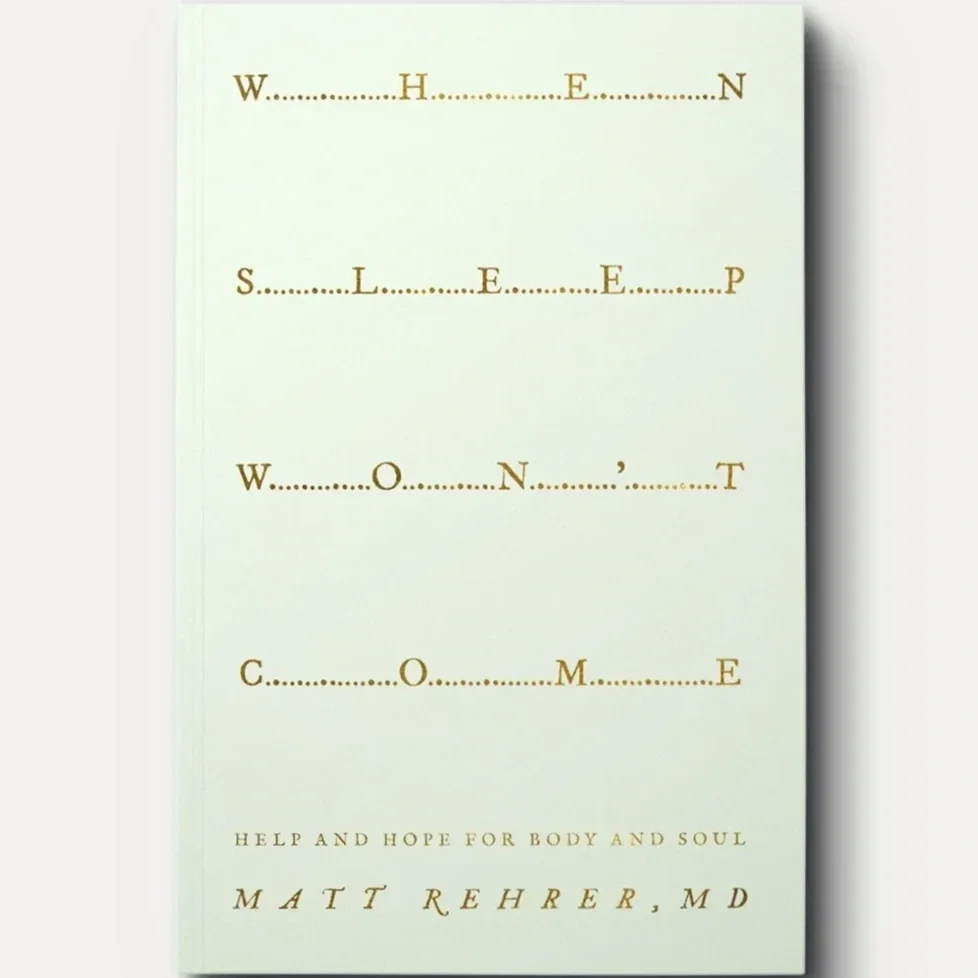
If you’ve ever stared at the clock at 2:17 a.m., wondering when sleep will finally come, you’ll recognize the struggle Matt Rehrer, MD, addresses in When Sleep Won’t Come: Help and Hope for Body and Soul (New Growth Press, 2026).
His Own Sleep Struggles
Rehrer, an emergency medicine physician, wrote this slim book after his own sleep struggles from shift work, parenting, and ministry demands. He also noticed patients coming to the ER in the early hours because of sleeplessness. At his church, where he serves as a pastor and counselor, sleeplessness was a common problem among the people he came alongside, and it made their other trials even worse.
“Is sleep defined as the absence of wakefulness?” Rehrer asks. “Hardly. Sleep showcases an elegant design by a Master Craftsman that is so complex that it baffles scientists today.”
And if you’re the one awake at 2:17 a.m., it probably baffles you, too. When Sleep Won’t Come helps us make sense of sleep and insomnia and, hopefully, get a good night’s sleep.
Why I Recommend “When Sleep Won’t Come”
Let me tell you what I like most about When Sleep Won’t Come and why I recommend it to people who struggle with sleeplessness and to those who care for them.
First, it is easy to read. When you’re short on sleep, who wants a boring treatise on sleep?
Second, Rehrer provides a fairly comprehensive treatment of the subject, from the blessings of sleep and the effects of insufficient sleep to medical and spiritual factors in sleeplessness to wise ways to pursue better sleep. He doesn’t reduce sleeplessness to either a medical problem or a spiritual problem. He addresses the whole person.
I imagine the chapter on better sleep might be the first one you turn to, and it won’t disappoint.
Rehrer introduced me to the Sleep Condition Indicator (SCI), used by doctors to guide the management of sleep problems, and a sleep-tracking device called the actigraph, which helps assess sleep. He also discusses treatment options you are probably familiar with, such as over-the-counter sleep aids like melatonin and antihistamines, prescription medications, exercise, and your sleep environment (cool, dark, and quiet is best—no surprise there).
I appreciated his insights on napping, which can be restorative or counterproductive. Years ago, I counseled a 70-year-old woman who struggled with mild depression and poor sleep. Part of her problem was a long nap every afternoon. As she readjusted her schedule, became more physically active, and stopped her long naps, her nighttime sleeplessness and mood improved.
Third, I was surprised by how much Scripture is devoted to shut-eye—and the lack thereof. Here is just one: “Unless the Lord builds the house, those who build it labor in vain. Unless the Lord watches over the city, the watchman stays awake in vain. It is in vain that you rise up early and to late to rest, eating the bread of anxious toil; for He gives to his beloved sheep” (Psalm 127:1-2).
My Favorite Chapter
My favorite chapter was “Resting When We Cannot Sleep.” With a resting mind, you might continue to lie awake through the night, or you might drift off to sleep,” Rehrer acknowledges, recommending waiting with prayer.
That idea is especially meaningful for those who experience sleep anxiety. Sometimes the fear of not sleeping becomes almost as distressing as the sleeplessness itself.
Rehrer points the reader toward a different response: thankful prayer, meditation on God’s character and promises, and listening to worship music—the exact counsel I give to my counselees, including those who struggle with sleep anxiety and nocturnal panic attacks.
“We count sheep instead of remembering we are sheep,” Rehrer reminds us. “We count sheep instead of calling out to the Good Shepherd. He is the One who gives you rest.
“We forget some of the most recited verses in the Bible: ‘The Lord is my Shepherd, I shall not want. He makes me lie down in green pastures; He leads me beside quiet waters’ (Psalm 23:1-2).
“Sheep lie down when they have no wants and no fear.”
Following this section, the reader is treated to a very real and important recommendation on how to live the next day exhausted. That matters because sometimes we cannot make ourselves sleep. But we can still choose how we respond when sleep doesn’t come.
Summing Up
When Sleep Won’t Come is a helpful resource for those looking for answers to sleeplessness, as well as for those who care for them. It is easy to read, provides practical and biblical strategies for improving sleep, and is Scripturally rich.
You might just want to keep it on your nightstand. You never know—it could put you to sleep.
⭐️⭐️⭐️⭐️⭐️